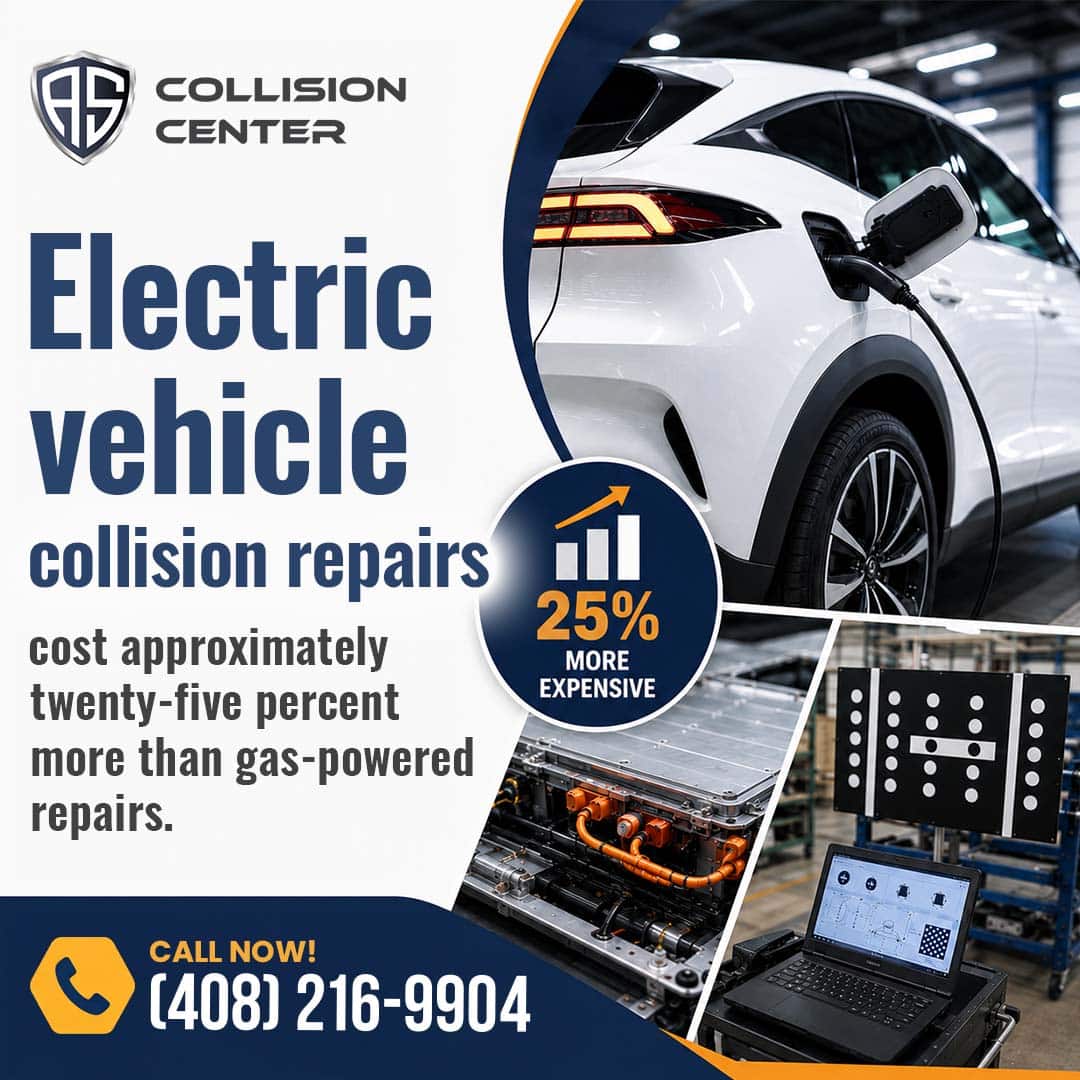
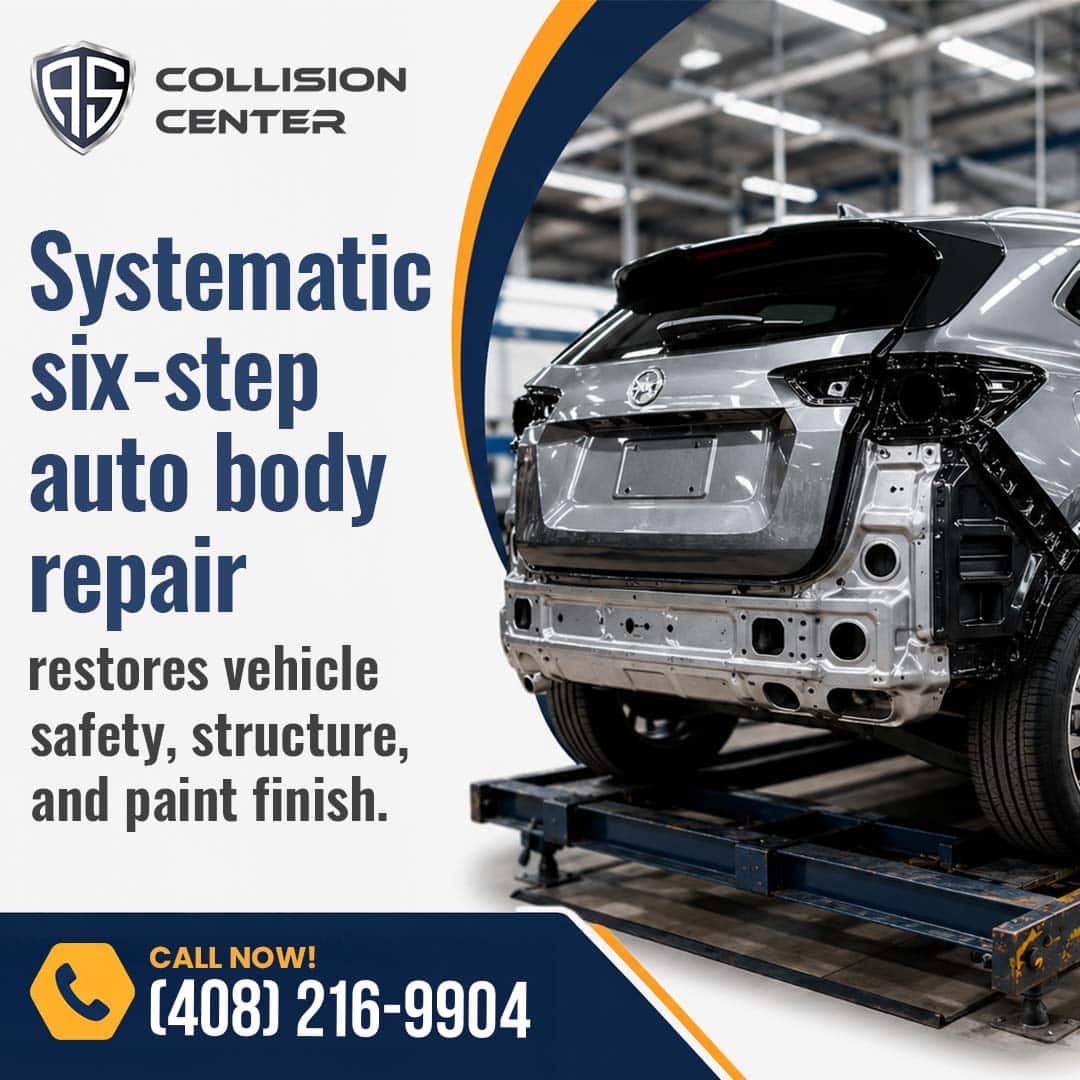
Collision repair for electric vehicles differs from gas-powered repair in three main ways: high-voltage battery safety checks, more frequent ADAS sensor calibration, and specialized parts sourcing. AutoShield Collision provides reliable EV collision repair in Santa Clara, from battery safety inspections and sensor recalibration to sourcing the right OEM parts, before every vehicle leaves the lot.

What Makes EV Collision Repair Different From a Gas-Powered Car?
An EV collision repair involves systems a gas-powered car doesn’t have: a high-voltage battery pack, an electric drive unit, and a denser network of driver-assistance sensors.
- High-voltage disable procedures. Technicians follow the manufacturer’s exact steps to power down the battery before cutting, welding, or panel work begins.
- Battery enclosure inspection. A minor rear-end or side impact can crack or shift the battery housing, and the damage isn’t always visible.
- ADAS recalibration. Cameras and radar tied to lane-keeping and automatic braking need re-aiming after most repairs touching the bumper, windshield, or mirrors.
- Specialized parts sourcing. EV panels and battery components are more often ordered directly from the manufacturer, adding lead time.
How Often Do EVs Need Sensor Recalibration After a Collision?
More often than gas-powered cars, and sometimes more than once per repair. Mitchell’s 2025 collision data show electric vehicles needed an average of 1.70 sensor recalibrations per repair, compared with 1.54 for gas-powered vehicles. In practical terms, an EV is more likely to leave the shop needing more than one safety system, such as a front camera and a radar sensor, re-aimed before it’s cleared to drive. Skipping this step means features like automatic braking or lane-keeping may not respond the way they’re supposed to.
Is It Safe to Drive an EV After a Minor Collision?
Not until a technician has scanned the vehicle and checked the battery enclosure, even if the damage looks cosmetic. A cracked housing or damaged high-voltage cable isn’t always visible, and an uncalibrated ADAS system means automatic braking may not respond correctly. A pre- and post-repair diagnostic scan is the reliable way to confirm the vehicle is safe.
Get EV Collision Repair in Santa Clara
AutoShield Collision is a collision repair shop near Santa Clara City Hall, located at 860 Civic Center Dr in Santa Clara, just steps from Civic Center Park. We offer auto body collision repair for both gas-powered and electric vehicles. For EVs, our technicians handle the full process, from battery safety checks and sensor recalibration to body, frame, and paint work, backed by a lifetime warranty for as long as you own your vehicle. We also manage EV insurance claims directly with all carriers.
If your EV needs collision repair, call us at (408) 216-9904, email service@autoshieldcollision.com, or request a free estimate online.

Frequently Asked Questions
How long does EV collision repair take compared to a gas car?
Longer, generally, due to added diagnostic scans, calibration steps, and OEM parts lead times.
What should I do right after an EV collision?
Move to a safe location, avoid touching damaged high-voltage components, and have the vehicle towed rather than driven further than necessary.
Will a collision affect my EV’s battery range or lifespan?
It can if the pack or its enclosure was impacted. A technician needs to inspect and test the battery before ruling it out.