Vehicle accidents affect thousands of Campbell drivers each year, often leaving behind damage that extends far beyond visible dents and scratches. While collision damage to bumpers, doors, and paint receives immediate attention, structural and mechanical alignment issues represent some of the most overlooked consequences of even minor accidents. This hidden damage develops when collision forces both body panels and suspension components out of their factory specifications, creating problems that drivers encounter daily: vehicles that pull to one side during commutes, doors that don’t close properly, and uneven panel gaps that worsen over time. Many drivers dismiss these symptoms as cosmetic issues, unaware that untreated alignment problems compromise both safety and vehicle performance on local roads.
At AutoShield Collision, we understand these challenges that drivers face and provide professional alignment inspection for both structural and mechanical components using computerized systems to detect misalignment issues before they escalate. Our collision repair services near Campbell help local drivers avoid the safety risks and mounting costs associated with driving misaligned vehicles. We offer the expertise needed to restore proper vehicle performance and structural integrity after any collision.
Understanding Vehicle Alignment After Accidents
What Is Vehicle Alignment?
Vehicle alignment encompasses both structural body alignment and mechanical wheel alignment. These two systems work together to maintain your vehicle’s safety, performance, and appearance. When either system becomes misaligned after an accident, the entire vehicle’s operation is affected.
Structural alignment refers to the proper positioning of body panels, doors, trunk, hood, and frame components. These elements must align correctly to maintain vehicle integrity, aerodynamics, and the safety systems’ function.
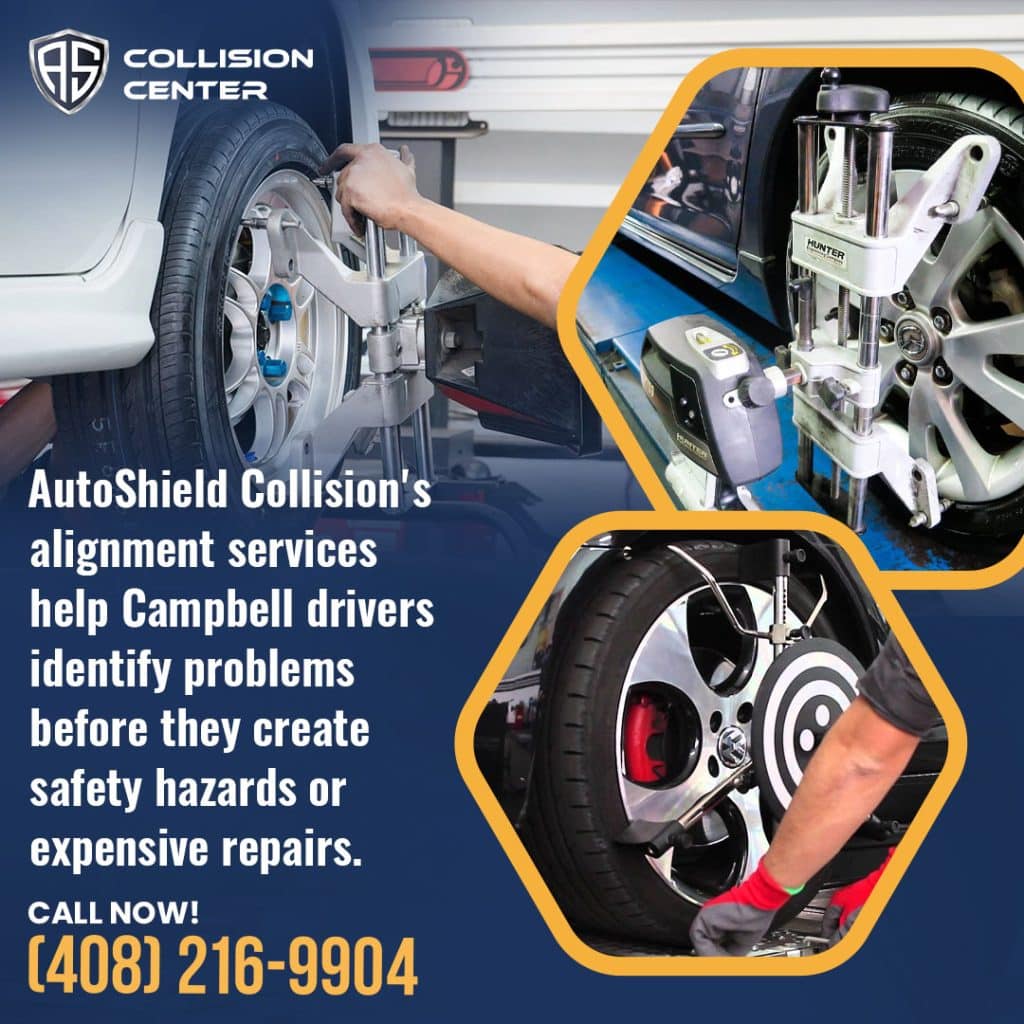
Mechanical alignment involves adjusting your wheels so they are perpendicular to the ground and parallel to each other. This precise positioning allows your vehicle to travel straight without disruption and maintains proper traction, steering control, and tire wear.
Types of Alignment Issues After Accidents
Structural Body Alignment Problems
The first type is frame misalignment, which occurs when the vehicle’s underlying structure shifts during collision impact. Even minor accidents can cause frame distortion that affects how all other components align with each other.
Panel alignment issues can develop when body panels shift out of their proper positions. This creates uneven gaps between panels, doors that don’t close properly, and aesthetic problems that can worsen over time.
Door and closure alignment problems manifest when doors, trunk lids, or hoods don’t fit properly in their openings. This can affect both vehicle security and weather sealing.
Mechanical Wheel Alignment Problems
The mechanical alignment process involves three primary angles:
- Camber: The inward or outward tilt of your tires when viewed from the front
- Toe: How your tires turn inward or outward when viewed from above
- Caster: It is the forward or rearward tilt of the spindle support arm
How Accidents Affect Both Types of Alignment
Even minor fender-benders can shift multiple vehicle systems, throwing off both structural and mechanical alignment. Collision forces travel through your vehicle’s structure, affecting:
- Body panels and frame components that maintain structural integrity
- Suspension components (shocks, struts, springs) that control wheel position
- Door frames and closure mechanisms that affect fit and function
- Steering system components that translate driver input to wheel movement
At AutoShield Collision, our auto body and collision repair technicians use advanced computerized measurement systems to detect the alignment issues that other collision shops might miss. Our approach includes precision frame measurement and wheel alignment assessment, allowing us to identify interconnected problems and provide complete solutions for Campbell drivers.
Identifying Structural Alignment Problems After Your Accident
Visual Indicators
Uneven panel gaps between body components indicate structural misalignment that requires professional attention. Check the spaces between your hood and fenders, doors and door frames, and trunk lid and rear panels, as these gaps should be consistent and parallel across all surfaces.
Hood or trunk alignment issues become apparent when these components don’t sit flush with surrounding panels, creating visible misalignment that affects both appearance and function. These alignment problems often worsen over time as normal driving forces continue to stress the already compromised structural components.
Functional Body Alignment Problems
Proper alignment maintains the integrity of rubber seals and gaskets, but collision damage can create gaps that allow moisture intrusion into the passenger compartment. Unusual road noise or wind noise may develop when panels don’t align properly, creating gaps that allow air and sound to enter areas where they shouldn’t penetrate.
Difficulty operating windows or doors can result from frame distortion that affects the smooth operation of these components. These operational issues typically indicate that the collision forces were significant enough to affect the vehicle’s structural integrity, making a professional assessment at a collision shop necessary to identify all related alignment problems that may not be immediately visible.
Frame Alignment Assessment
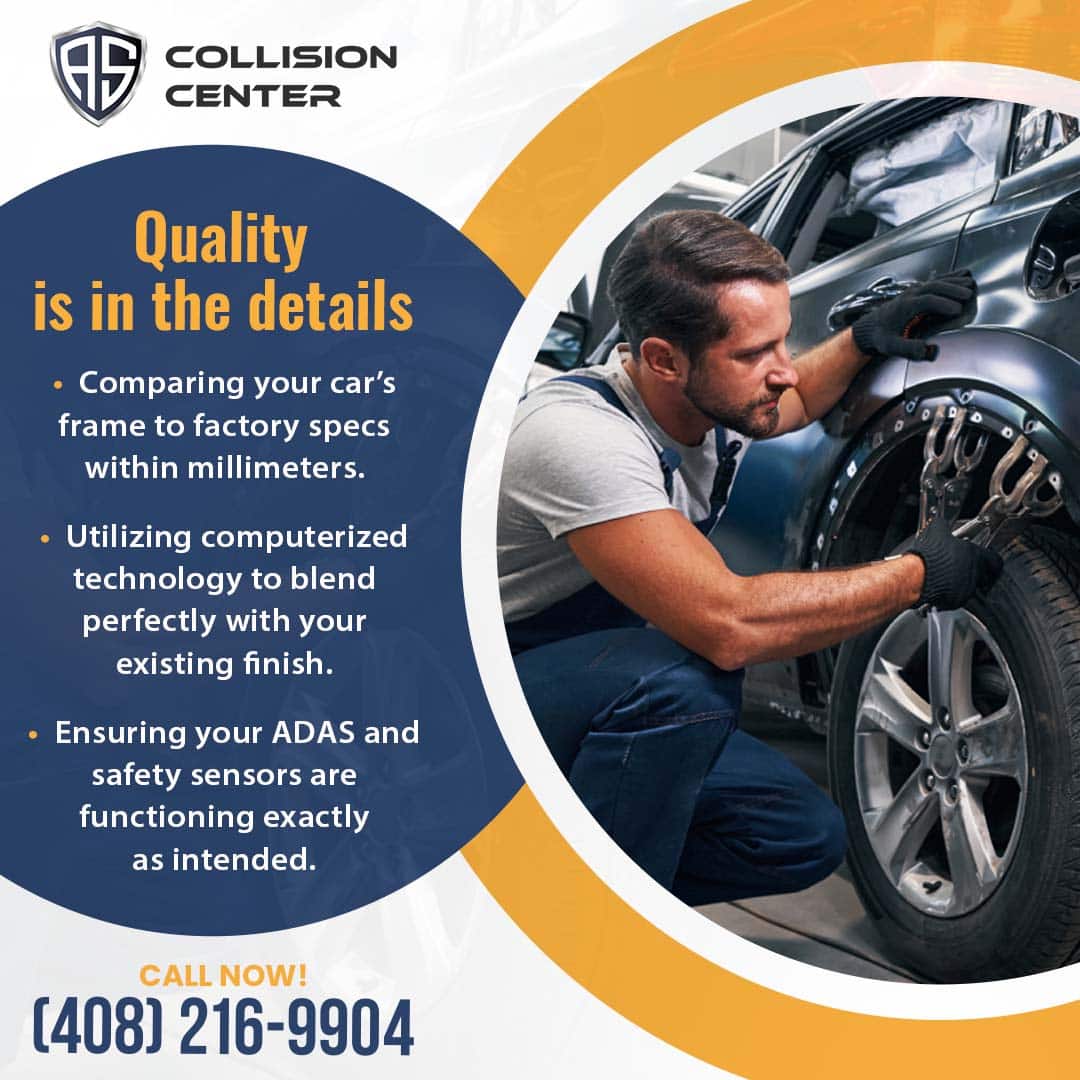
Frame alignment issues represent the most serious type of structural misalignment because they affect every other component attached to the vehicle’s frame. Even minor accidents can cause frame distortion that creates a cascade of alignment problems throughout the vehicle. Professional frame alignment inspection uses computerized measuring systems to detect deviations as small as millimeters that can impact vehicle safety and performance.
Signs of frame misalignment include multiple panel gaps being uneven simultaneously, doors that bind or don’t close properly across the entire vehicle, and steering problems that seem unrelated to wheel alignment. Frame alignment problems often require specialized collision repair equipment and expertise to correct properly, making professional assessment critical after any accident.
Identifying Mechanical Alignment Problems After Your Accident
Primary Wheel Alignment Warning Signs
Understanding the connection between accident damage and mechanical alignment symptoms helps you recognize when professional inspection is needed at a qualified collision shop.
Vehicle Handling Issues
The most common sign of wheel alignment problems that develop after a collision is the car pulling to one side while driving straight. If you find yourself constantly correcting your steering to maintain a straight path, your wheels are likely misaligned due to accident impact forces that shifted suspension components.
A steering wheel that sits off-center when driving straight indicates that your wheels are pointing in different directions, even when you’re traveling in a straight line. This misalignment forces your steering system to compensate for the collision damage, creating the crooked steering wheel position that drivers notice immediately.
Vibrations through the steering wheel occur at highway speeds because your tires are fighting against each other instead of working together, often due to suspension damage from the accident. These vibrations typically worsen as driving speeds increase, making highway driving particularly uncomfortable and potentially dangerous for Campbell drivers navigating local freeways.
Tire Wear Patterns
Uneven tire wear develops across the tread when wheels become misaligned after accidents, causing your tires to wear unevenly across their entire surface. Misalignment causes specific areas to carry more weight or scrub against the road surface differently, creating distinctive wear patterns that trained auto body and collision repair technicians can identify during inspection.
Feathered tire edges appear on the tread as a clear indicator of alignment problems that develop when one side of the tread becomes smooth while the other remains sharp, typically indicating toe alignment problems caused by an accident impact. This distinctive wear pattern helps collision repair professionals identify the specific type of misalignment affecting your vehicle.
When you need reliable collision repair near Campbell that includes both structural and mechanical alignment correction, the experienced team at AutoShield Collision has the expertise to restore your vehicle’s proper alignment and handling characteristics.
When to Get Your Alignment Checked After an Accident
Immediate Inspection Timeline
Schedule both structural and mechanical alignment inspections within 24-48 hours after any collision. This timeframe allows you to identify problems before they worsen and helps maintain your vehicle’s safety and integrity for continued driving.
The urgency stems from how alignment problems compound over time. What starts as minor structural or mechanical issues can quickly develop into accelerated tire wear, progressive body panel misalignment, suspension component stress, or compromised safety systems.
Professional vs. DIY Assessment
Professional alignment inspection provides accurate measurements for both structural and mechanical systems. While you can perform basic visual checks for obvious panel gaps or steering problems, proper alignment assessment requires specialized equipment and expertise.
A qualified collision shop will perform a thorough alignment evaluation that includes structural frame measurement, body panel gap assessment, computerized wheel alignment measurement, suspension system evaluation, and door and closure operation testing to verify proper function.
Safety Risks of Driving With Alignment Problems
Structural Alignment Safety Concerns
Crash protection is compromised when frame or body panel misalignment affects how your vehicle absorbs impact energy during subsequent accidents, fundamentally undermining the safety systems designed to protect occupants in collision situations. Proper structural alignment maintains the integrity of crumple zones, airbag deployment paths, and energy absorption mechanisms that manufacturers engineer into every vehicle.
Mechanical Alignment Safety Hazards
Mechanical system interference can occur when structural misalignment affects the operation of steering, braking, or suspension components. This creates a dangerous situation where bent panels or frame components interfere with proper mechanical function. This interference can cause unpredictable vehicle behavior that puts drivers and passengers at risk, especially during emergency maneuvers or adverse driving conditions.
Reduced steering control affects your ability to avoid hazards when poor wheel alignment compromises your vehicle’s response to steering inputs. Increased stopping distances occur on wet roads because misaligned wheels don’t maintain proper contact with the road surface.
Accelerated tire wear leads to blowouts when uneven wear patterns create weak spots in your tires that can fail suddenly, particularly dangerous during highway driving or emergency maneuvers where tire integrity is critical for maintaining vehicle control. These sudden failures can cause loss of vehicle control that endangers not only the driver and passengers but also other motorists sharing the road.
Campbell drivers deserve an auto body and collision repair facility that addresses both structural and mechanical alignment issues with equal expertise. AutoShield Collision delivers alignment services that restore both your vehicle’s appearance and performance after any accident. We make sure that all collision repairs meet manufacturer specifications for ideal protection.
AutoShield Collision: Professional Collision Repair Near Campbell
AutoShield Collision specializes in collision repair near Campbell, providing alignment services that restore your vehicle’s safety and performance after any accident.
Modern Technology for Complete Alignment Services
Our 27,240 square foot collision repair facility houses 44 specialized bays equipped with both computerized wheel alignment systems and precision frame measuring equipment. This dual capability allows us to address alignment issues.
Our certified technicians have specialized training in both body alignment and mechanical alignment procedures. We understand that collision-related alignment issues often affect multiple systems that require coordinated repair approaches.
Complete Collision Repair Solutions Under One Roof
Our collision shop handles every aspect of collision repair from initial assessment through final quality verification. When your vehicle needs alignment after an accident, we can address all issues at our shop. We restore both body panel alignment and wheel alignment to manufacturer standards. This approach maintains your vehicle’s safety, performance, and appearance.
AutoShield Collision’s Commitment to Campbell Drivers
Insurance Assistance
We accept all insurance carriers and handle the entire claims process for collision repairs. You receive clear explanations of all alignment issues found during inspection. Our team works directly with insurance adjusters to make the approval process smooth, saving you time and reducing stress during the collision repair experience.
Lifetime Warranty
Our lifetime warranty covers all repair work as long as you own your vehicle. This coverage includes both structural repairs and mechanical adjustments. We stand behind our workmanship because we use only high-quality materials and proven auto body and collision repair techniques that meet or exceed manufacturer specifications.
BBB Accredited
Our collision shop is BBB-accredited with an A+ rating for four years running. This recognition demonstrates our consistent commitment to quality collision repairs near Campbell. Our reputation for reliable repairs has been built through years of delivering exceptional results and maintaining honest, transparent relationships with every customer we serve.

Frequently Asked Questions
Can I drive my car to the shop if I suspect alignment problems after an accident?
If your car pulls severely to one side, has major steering problems, or shows signs of tire damage, have it towed to avoid safety risks. For minor symptoms, drive slowly and carefully to the nearest collision repair shop, avoiding highway speeds and sudden maneuvers.
Should I get a wheel alignment after a car accident?
You should schedule both structural and mechanical alignment inspections within 24-48 hours after any collision, regardless of how minor the accident appears. Professional assessment can detect alignment problems before they create safety hazards or expensive repairs.
Is it safe to drive a car with bad alignment?
Driving with alignment problems creates serious safety risks, including reduced steering control, increased stopping distances on wet roads, and potential tire blowouts from uneven wear. Misaligned vehicles also compromise crash protection and can interfere with steering, braking, or suspension operation.
How much does alignment cost after an accident in the Campbell area?
Alignment costs vary depending on the extent of damage and the type of repair needed. AutoShield Collision provides transparent estimates and works with insurance companies to cover alignment repairs resulting from covered accidents.
Get a Professional Alignment Assessment After Your Accident
Contact a qualified collision shop immediately if you notice any alignment symptoms. Both structural and mechanical alignment problems can worsen quickly after accidents, making early intervention critical. Schedule a professional inspection even if the damage seems minor. Collision forces can affect multiple systems simultaneously, making a thorough evaluation necessary to identify all alignment issues.
At AutoShield Collision, our team of certified technicians provides complete alignment services. Whether you’ve experienced a minor fender-bender or a more serious collision, proper alignment of all vehicle systems is vital for your safety, performance, and vehicle value. Don’t let alignment issues compromise your driving experience or put you at risk on Campbell’s roads.
Contact AutoShield Collision at (408) 216-9904 or service@autoshieldcollision.com today for a thorough alignment inspection. Our experienced technicians will provide you with a detailed assessment of alignment issues, along with transparent repair recommendations to restore your vehicle to pre-accident condition.