Crumple zones protect vehicle occupants during collisions by absorbing impact energy before it reaches the passenger compartment. These engineered structures deform in predictable ways to reduce the force transferred to people inside. When an accident damages crumple zones, proper restoration requires specialized knowledge, precise measurements, and manufacturer-approved procedures.
At AutoShield Collision, our certified technicians repair crumple zone damage using advanced frame measurement systems and manufacturer-specific procedures. These safety structures represent the difference between minor injuries and severe trauma during collisions. Our team delivers collision repair in Santa Clara with the precision and expertise needed to restore vehicles to factory safety standards.

How Vehicle Crumple Zones Function
Crumple zones are specific sections of a vehicle’s structure designed to collapse in controlled ways during impacts. These zones absorb kinetic energy that would otherwise transfer directly to occupants.
Vehicle manufacturers spend years engineering crumple zone behavior through crash testing and computer simulation. Each zone has specific collapse characteristics based on the type and angle of impact expected in that location. Front crumple zones handle head-on collisions. Rear zones manage impacts from behind. Side structures protect against lateral forces.
When a collision occurs, the vehicle’s kinetic energy must dissipate somewhere. Without crumple zones, this energy transfers directly into the passenger cabin, creating violent deceleration that causes severe injuries. Properly designed crumple zones extend the deceleration time by collapsing progressively.
Crumple zones in modern vehicles use varying metal thicknesses and strategic weakening points. Ultra-high-strength steel protects the passenger cabin while softer metals in crumple zones deform more easily. This combination creates a strong safety cage surrounded by energy-absorbing structures.
Crumple zones integrate with other safety systems to create layered protection. Airbags deploy based on deceleration rates measured during impact. If crumple zones fail to absorb energy correctly, airbags receive incorrect deployment signals. Advanced driver assistance systems (ADAS) rely on proper crumple zone function to calculate impact severity and activate safety features.
Damage Patterns From Different Collision Types
Different accident types create distinct patterns of crumple zone damage, with front-end collisions affecting frame rails and radiator support structures, while side impacts compromise door beams and B-pillar reinforcements.
Front-End Collision Damage
Head-on impacts typically damage front frame rails, radiator support structures, and bumper reinforcement bars. These components collapse or fold inward during severe impacts. Minor collisions may only bend the outermost structures. High-speed crashes can cause damage all the way back to the firewall.
Front crumple zones also house critical mechanical components. The engine, transmission, cooling system, and front suspension all sit within these energy-absorbing areas. Proper repairs must address both structural and mechanical damage to restore full functionality.
Rear-End Impact Patterns
Rear collisions damage the trunk floor, rear frame rails, and quarter panel structures. These areas protect the fuel system and rear passengers. Rear impacts also commonly damage the rear suspension mounting points, which affects wheel alignment and handling.
Side Impact Damage
Side collisions create some of the most dangerous damage patterns. Vehicles have less crumple zone space on the sides, so door beams and B-pillar reinforcements become critical. These structures must remain strong enough to prevent door intrusion while still absorbing some impact energy.
Offset and Angular Collisions
Offset collisions strike only one corner of the vehicle, creating asymmetric damage patterns. These impacts can twist the frame, misalign suspension mounting points, and damage crumple zones on multiple sides simultaneously.
Professional Assessment and Measurement Systems
Professional auto body collision repair begins with computerized frame measurement that compares the vehicle’s current dimensions to manufacturer specifications, detecting misalignment as small as one millimeter.
Initial Inspection and Electronic Scanning
The repair process starts with a thorough visual inspection. Technicians photograph all visible damage and create detailed notes about collision circumstances. This documentation establishes the baseline for insurance claims and repair planning.
Electronic scanning follows the initial inspection. Modern vehicles store crash data in multiple control modules. Diagnostic scanners retrieve this information to identify which safety systems experienced impact forces. Stored trouble codes reveal damaged sensors, deployed airbags, and electronic faults that might not be visible during physical inspection.
Frame Measurement and Analysis
Computerized frame measurement provides the foundation for repair planning. Technicians attach the vehicle to a measuring system and record dimensional data at dozens of reference points. This data shows exactly how far each structural component has moved from its original position.
Professional collision repair shops use measuring systems that include manufacturer-specific vehicle data for thousands of vehicle models. These systems provide real-time monitoring during repairs, allowing precise restoration regardless of make or model.
Disassembly and Hidden Damage Assessment
Removing damaged panels and components often reveals additional problems. A bent fender might hide a damaged strut tower. A pushed bumper cover could conceal bent frame rails. Complete disassembly allows technicians to inspect weld integrity, identify stress cracks, and assess hidden components that determine the full scope of necessary repairs.
Structural Realignment and Component Replacement
Frame straightening applies controlled hydraulic force to damaged structures while computer monitoring shows real-time dimensional changes as the metal moves back into position.
Technicians connect specialized pulling equipment to targeted points on the damaged structure. The hydraulic system applies a carefully calculated force in specific directions determined by the measurement data. As the pulling process unfolds, computer monitors track position changes in real time, alerting technicians when the structure reaches factory specifications.
When Replacement Becomes Necessary
Some damage cannot be straightened. Frame rails with severe bends, cracked reinforcements, and torn metal must be replaced. Manufacturers specify which components can be repaired and which require replacement. Adhering to these specifications preserves the engineered collapse characteristics that protect passengers during future collisions.
Auto body collision repair near you should prioritize OEM (Original Equipment Manufacturer) parts for structural components. These components are designed to replicate how the factory structure absorbs and distributes impact forces. They fit precisely with adjacent components and include all necessary mounting points and reinforcements.
Aftermarket parts may look similar but often lack critical features. Missing weld flanges, incorrect metal thickness, and altered mounting locations all compromise crumple zone function.
Joining Methods and Procedures
Modern vehicles use multiple joining methods. Traditional welding remains common for steel components. Structural adhesives join aluminum panels and composite materials. Some repairs require both techniques together.
Each joining method has specific procedures. Welding requires particular electrode types, current settings, and weld placement. Structural adhesives need clean surfaces, controlled temperatures, and adequate curing time.
Material-Specific Repair Challenges
Aluminum structural components require different repair approaches than steel because heat treatment affects mechanical properties, requiring component replacement rather than straightening in most cases.
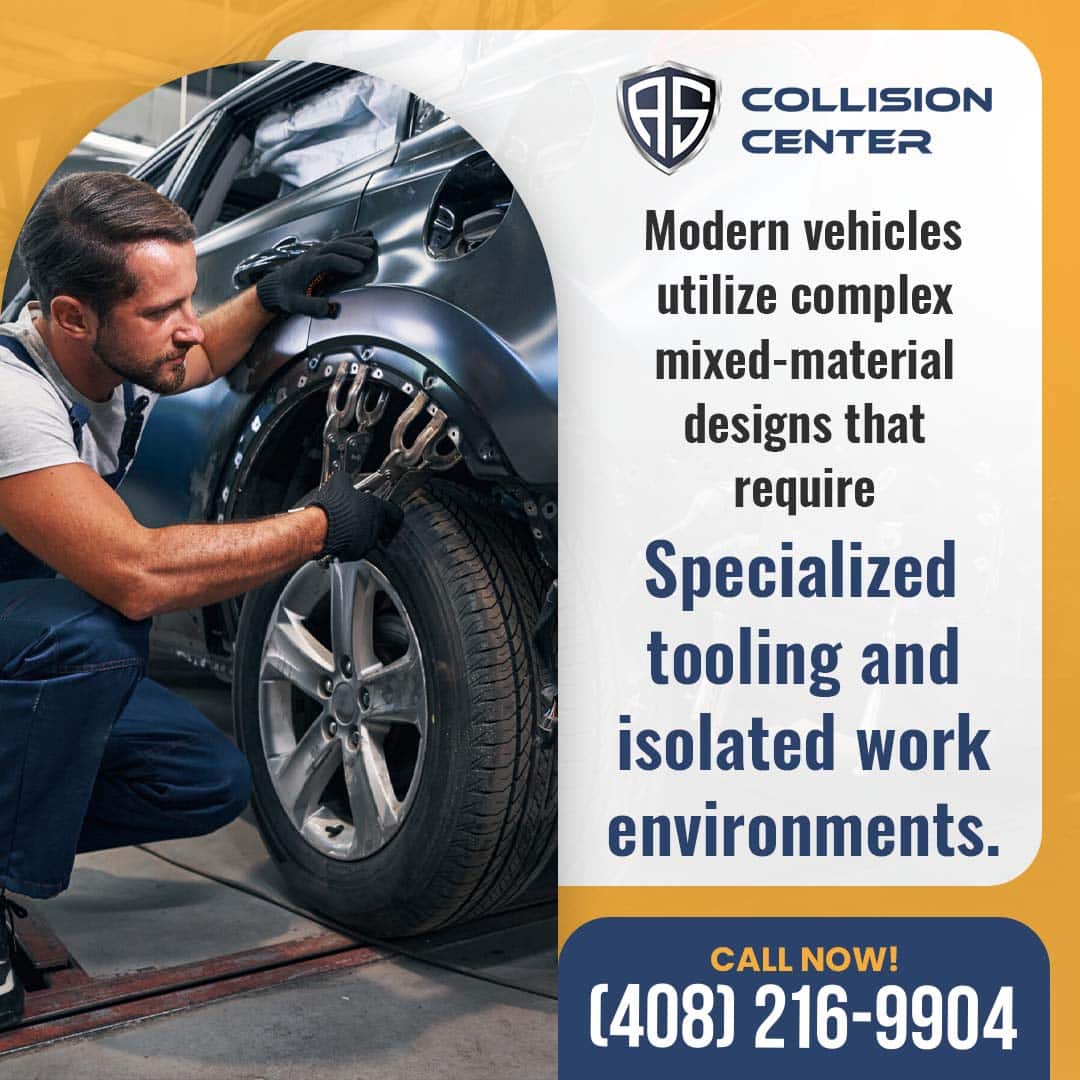
Vehicle manufacturers use increasingly sophisticated materials to reduce weight while maintaining strength. These materials create specific repair challenges that require specialized knowledge and equipment for proper auto body collision repair.
Aluminum and High-Strength Steel
Aluminum offers excellent strength-to-weight ratios but cannot be heated and straightened like steel. Most aluminum damage requires component replacement rather than repair. Aluminum also creates galvanic corrosion concerns when it contacts steel. Collision repair shops must use isolation techniques, special fasteners, and protective coatings to prevent corrosion.
Modern vehicles use multiple steel grades in a single structure. The roof and door frames might use ultra-high-strength steel for occupant protection. The front fenders use regular steel for easier repair. These different steel grades require specific repair procedures. Ultra-high-strength steel cannot be heated during straightening because heat reduces its strength.
Structural Adhesives and Composite Materials
Many vehicles now use structural adhesives instead of or in addition to welds. These adhesives create strong, flexible bonds that distribute stress across larger areas than welds. However, adhesive repairs demand thorough surface preparation and controlled temperature conditions.
High-performance and electric vehicles increasingly use carbon fiber and composite materials. These materials offer exceptional strength with minimal weight but cannot be repaired using standard methods. Most composite damage requires complete component replacement during repair processes.
Verification and Quality Control Procedures
After structural repairs are complete, technicians verify dimensions using computerized measuring systems, confirming that every reference point matches factory specifications within permissible tolerances.
This verification step confirms that crumple zones have been restored to their original geometry. Electronic systems also require verification. Technicians clear stored trouble codes and perform system tests to confirm proper operation.
ADAS Recalibration Requirements
ADAS sensors need recalibration after structural repairs. These systems include radar units in bumpers, cameras behind windshields, and ultrasonic sensors in mirrors. Even small positional changes affect sensor accuracy.
Recalibration processes vary by vehicle manufacturer and system type. Some systems require specialized targets positioned at precise distances and angles from the vehicle. Others need specific testing procedures to verify sensor alignment and functionality. Advanced vehicles may require multiple recalibration steps to restore all safety features.
Professional collision repair shops invest in OEM-level diagnostic equipment that accesses manufacturer-specific systems. This provides complete visibility into electronic faults, stored trouble codes, and system status indicators.
The Impact of Inadequate Repairs
Improperly repaired crumple zones cannot absorb impact energy as designed, increasing forces transferred to vehicle occupants and turning survivable accidents into serious injury events.
Crash test ratings become meaningless after improper collision repairs. A vehicle that earned five-star safety ratings in government testing may perform much worse after crumple zones are damaged and incorrectly repaired.
Long-Term Safety Consequences
Misaligned structures cause premature wear on mechanical components. Suspension parts, tires, and steering components all wear faster when the frame is not properly aligned. Alignment problems also affect vehicle handling. A car that pulls to one side, has uneven tire wear, or feels unstable at highway speeds may have underlying structural problems from incomplete auto collision repair near you.
Improper repairs reduce resale value more than quality restoration. Vehicle history reports document accidents, and potential buyers are rightfully concerned about how repairs were performed. Professional repairs include detailed documentation that supports vehicle value during resale.
AutoShield Collision’s Approach to Crumple Zone Restoration in Santa Clara
AutoShield Collision combines advanced diagnostic technology, certified expertise, and manufacturer-approved procedures to restore crumple zones to factory specifications.
Our facility uses computerized measuring systems with manufacturer-specific vehicle data for thousands of vehicle models. These systems provide real-time monitoring during repairs and generate detailed reports showing dimensional accuracy before and after restoration. This level of precision and documentation is necessary to provide quality auto body collision repair near you that meets factory safety standards.
Experienced Technicians and Advanced Equipment
Our technicians bring years of experience in structural welding and advanced joining techniques to every repair. We follow manufacturer repair procedures exactly as published, accessing OEM repair manuals that specify when components can be repaired versus replaced.
We maintain specialized equipment for ADAS calibration, aluminum repair, and precise frame measurement. Dedicated workspaces for different materials prevent contamination and allow us to follow strict quality control protocols throughout every repair. This combination of experienced technicians and advanced technology makes AutoShield Collision a trusted provider of collision repair in Santa Clara.
Commitment to Quality and Customer Service
We stand behind our work with a lifetime warranty on workmanship for as long as you own your vehicle. Our BBB accreditation and A+ rating reflect four years of maintaining the highest standards in customer service and business integrity.
Our team works directly with all insurance carriers to streamline the claims process while advocating for repairs that meet manufacturer safety standards. We provide collision repair with transparent communication and expert service at every step to drivers throughout Santa Clara.
Frequently Asked Questions
Can crumple zones be repaired, or must they always be replaced?
Some crumple zone components can be repaired using manufacturer-approved straightening procedures, while others must be replaced. The decision depends on damage type, the specific component affected, and manufacturer guidelines. Severely bent or torn metal requires replacement, while minor bends may be straightened if within tolerance limits.
How long does proper crumple zone repair take?
Complete structural repair typically requires one to three weeks, depending on damage severity and parts availability. Proper procedures cannot be accelerated without risking inadequate restoration. Structural adhesives need adequate time to cure, and paint requires multiple days for proper application.
Does insurance cover proper crumple zone restoration?
Collision coverage typically includes necessary structural repairs. Policyholders have the right to proper restoration that returns their vehicle to pre-accident condition. Professional repair facilities can provide documentation supporting necessary procedures if disputes arise.
How can I verify that crumple zone repairs were performed correctly?
Request copies of pre-repair and post-repair measurement reports. These documents show dimensional data before and after repairs. You can also ask to see the repair procedures followed and verify that manufacturer-recommended techniques were used.
Will my vehicle be as safe after a crumple zone repair?
Repairs that adhere to manufacturer guidelines and utilize correct equipment, materials, and methods restore the vehicle’s crash protection to factory standards. This requires professional auto body collision repair using appropriate methods and OEM parts.

Expert Restoration in Santa Clara for Your Vehicle’s Safety
Crumple zones represent your vehicle’s primary defense against collision forces. Proper restoration requires specialized equipment, certified technicians, manufacturer-approved procedures, and adequate time. Shortcuts compromise the safety features that protect you and your passengers.
At AutoShield Collision, we combine advanced technology with experienced craftsmanship to deliver results that meet factory safety standards. Our facility has the equipment, training, and commitment needed to restore your vehicle correctly. Our BBB A+ rating, lifetime warranty, and certified technician team reflect our dedication to exceptional service.
Contact AutoShield Collision at (408) 216-9904 or service@autoshieldcollision.com for reliable auto body collision repair near you. Our team will assess your vehicle’s structural condition, explain necessary repairs, and restore crumple zones to factory specifications.